


Building a healthy salad is easy enough right?
But I’m pretty sure we can all agree that we’ve seen a fair share of people that get to the end of the salad bar line (with all the best intentions) and end up dumping half a cup of Ranch dressing all over their salad. We have all seen it or been culprits of it. Building a healthy salad can be a daunting task especially if we are faced with so many healthy and unhealthy options from a salad bar…bacon, hard-boiled eggs, ham, specialty cheeses, avocado, every dressing under the sun, and croutons to name a few. If we aren’t careful, entree salads can reach up to 1000 calories or more…ultimately debunking our recommended daily caloric intake.
Just like most things in life, the key to a healthy salad is balance and knowing which foods may ultimately tip the scale a little too far if you aren’t aware of portion sizes. Salads can be comprised of many different food groups (and should!) such as vegetables, lean protein, complex carbohydrates, fruits, low-fat dairy, healthy fats, and light dressing. So let’s jump right into this step-by-step toolkit.


Building your Base:

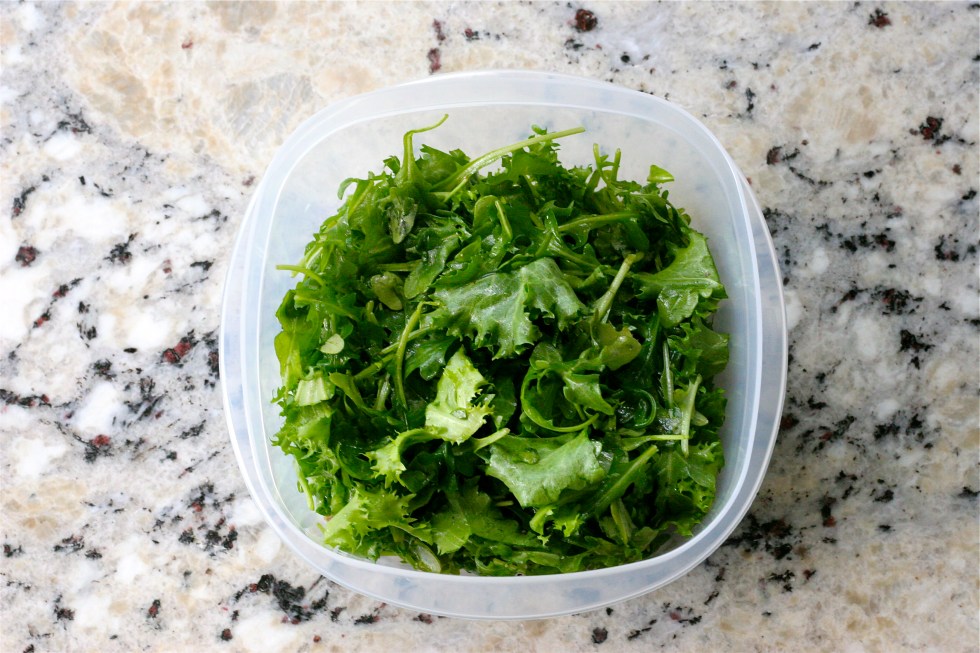
Choosing the best type of greens is essential to building a great salad. Avoid iceberg lettuce and get adventurous with the many options of nutrient-dense greens available.
- Options: arugula, Asian greens (mizuna, pac choi, tatsoi, etc.), romaine, bibb, mesclun, sorrel, endive, kale, spinach, or a spring mix.
For 20 calories per 2 cups, feel free to load up your bowl!
Great sources of fiber, folate, carotenoids, iron, calcium, and vitamins C and K.
Feel free to mix in fresh herbs to add an interesting dynamic of flavor (parsley, basil, cilantro, dill).
Quick tip:
Try massaging kale and arugula with 1-2 Tbsp of extra-virgin olive oil to make the leaves more palatable in a raw salad.
Load Up on Veggies:

The world provides endless variety when it comes to what vegetables to add to your salad. Try to stick with non-starchy vegetables to help keep your salad low-calorie and use what’s in season.
- Broccoli, cucumbers, cauliflower, carrots, squash, asparagus, bell peppers, red onion, etc.
- Avoid pre-marinated or fried vegetables to reduce unwanted calories from fat.
- For 25 calories per ½ cup serving, you can beef up your salad with loads of vitamins, minerals, anti-oxidants, and dietary fiber.
- Aim for at least 2 different vegetables on your salad to get in those anti-cancer effects!
Quick tip:
Aim to get in at least 3-5 servings of fruits and vegetables daily.
Picking your Protein:

Picking the right protein can be a little daunting. Here are few easy tips to guide you.
- Lean chicken, turkey, tuna, salmon, hard-boiled eggs, egg whites, or low-fat cheese
- Vegetarian: tofu, beans and legumes, such as black beans, lentils, garbanzo beans, and kidney beans.
- Avoid high fat and processed meats, such as bacon and salami, due to their link to increased cancer risk.
- 1 serving of animal protein is 3 ounces or a deck of cards (~90-100 calories).
- 1 serving of vegetarian protein is ½ cup of cubed tofu or ¾ cup of beans and legumes.
Don’t Forget the Fruits:

If your taste preferences allow this, adding sliced fresh fruit to your salad can help pack in the antioxidant power.
Use sliced fresh and seasonal fruit, drained canned fruit, or dried fruits without added sugar.
Commonly used fruits:
- Tomatoes
- Apples
- Pears
- Strawberries
- Blueberries
- Peaches
- Raspberries
Fats and Flavors:

Limit yourself to 1-2 flavor boosters per salad due to energy density per serving.
40-70 calories each. Keep a close eye on your serving size here!
- Examples:
- 2 Tbsp goat, feta, or mozzarella cheese
- 1 Tbsp chopped walnuts, pecans, or sliced almonds
- 1 Tbsp sunflower or pumpkin seeds
- 1 oz or ¼ of a whole avocado
- ¼ cup croutons
- 10 olives
- 2 Tbsp. dried cranberries
Giddy about Grains:

Serve on a salad warm or cold. Choose whole grains over refined grains (i.e. croutons, tortilla chips, etc.)
- Whole grains: quinoa, farro, barley, bulgar, whole wheat couscous, etc.
The serving size for whole grains is generally ½ cup cooked.
Try a popped whole grain, such as sorghum, amaranth, or quinoa for a crunch!
Dress Lightly:

Opt for a vinaigrette-based dressing over a cream dressing for less fat and calories.
Make your own vinaigrette to avoid any preservatives from store-bought dressings.
- Other key ingredients for homemade vinaigrette: lemon juice, vinegars (apple cider, balsamic, white, red wine, rice), mustard, fresh herbs, spices, fruit jam, honey, etc.
- Goal: < 1-2 Tbsp. dressing for an entrée salad
- To make your own vinaigrette, remember 1 part oil to 3 parts vinegar
Enjoy!
-EAW