

I recently finished a fictional novel One Second After by William R. Forstchen. The book is about the aftermath of an electromagnetic pulse (EMP) hitting the United States. Now I’m sure you are asking yourself “what is an EMP”? Time to nerd out for a second…an EMP is the result of a nuclear warhead being detonated miles above the Earth’s surface. An EMP emits blasts of gamma radiation which alter the magnetic and electric fields on Earth’s surface and ultimately permanently damage all of our electronics. And this would not be just a brief power outage. This would mean you cannot use any of these electronics again. That includes most cars nowadays, computers, phones, any outlets therefore, refrigeration and your freezer are also SOL. In other words, we are put back in the stone ages. The need to hunt and gather becomes our new reality.
This book really hit home with the reality of our food dependence as a society. Many kids and even adults don’t know where some of our food comes from, such as cuts of meat or fruits and vegetables. Some of us have not been challenged to think about where our food comes from. This book reminded me of the importance of knowing where food comes from, not only for the sake of understanding our food system, but also to teach myself skills that allow me to not be as dependent on grocery stores. God forbid, if something like this did actually happen in our time, I would have the skills to preserve food for longer periods of time.
When I think about pickling or canning, I immediately think of my grandparents. They are really the only people I remember actually pickling and canning food when I was a kid. Now, most people buy their canned or pickled goods in the grocery store. Pickling or canning now almost seems a little medieval really. However, pickling and canning can be a great skill to preserve any extra produce from your garden or even from the grocery store. Pickling has been used in different cultures for centuries, such as the Germans with sauerkraut (pickled cabbage) and Koreans with kimchi (fermented napa cabbage, radish, scallions, garlic, ginger, and cucumber). Pickling has also had a surge in the foodie world. It creates a twist on acidic flavors and allows chefs to be more eco-friendly by preserving certain produce for longer periods of time.
Pickling expands the lifespan of food through fermentation with brine or vinegar, which kills most bacteria and lowers the pH or acidity level. This fermentation process affects the texture and flavor of the food. Pickled foods can last up to 5-6 months. As opposed to canning, the food does not need to be completely sterile before sealing. The fermentation process, level of acidity, and lack of oxygen help kill the bacteria and alter the flavor of the food.
Basic pickling includes:
- Salt (and sometimes sugar as well)
- Vinegar
- Desired fruit or vegetable
- Desired spices (common ones: mustard seed, garlic, cinnamon, cloves)
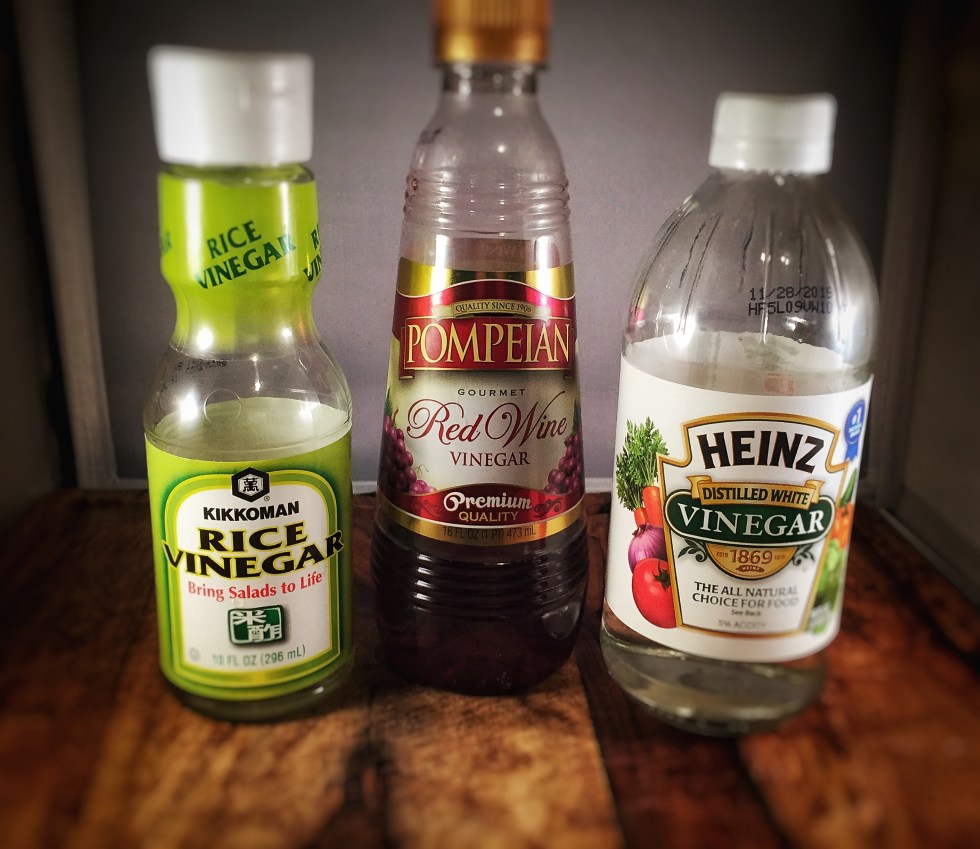
You can use a wide array of vinegars (white, red wine, balsamic, rice wine, apple cider, Sherry, white wine, etc.). I used red wine, white, and rice wine vinegar and made pickled cucumbers with onion, ginger, and radishes. See below for these recipes!

How to use pickled fruits and vegetables:
- Add to fresh salads.
- Serve pickled radishes with a sunny side egg.
- Top your sushi with homemade pickled ginger.
- Dip pickled vegetables in hummus.
- Enjoy as a stand-alone side dish with lunch or dinner.
- Add to an antipasto appetizer platter.
- Add to your favorite sandwich (i.e. Banh mi).
Health Benefits:
- Fermentation during pickling creates probiotics.
- Probiotics are live microorganisms that are intended to have health benefits.
- The potential health benefits of probiotics still requires more research, but some evidence has demonstrated that probiotics may help promote healthy gut flora, which in turn can help regulate gut function.
- Other probiotic-containing foods: yogurt, Kefir, kombucha, kimchi, sauerkraut, tempeh, etc.


Utensils:
- Cutting board
- Chef’s knife
- Vegetable peeler
- Mandoline slicer
- Pint size mason jars (wash all needed jars with soapy water, rinse, and dry before using)
- Measuring cups and spoons
Pickled Ginger


- Yield: 1 mason jar full
- Ingredients:
- 12 oz fresh ginger (2-3 big roots)
- 1 red radish
- 1 1/2 Tbsp Kosher salt
- 1 1/2 Tbsp granulated sugar
- 1/2 cup rice wine vinegar
- 1 cup water
- Directions:
- Peel the outer layer of the ginger root and discard.
- Using a mandoline slicer, slice the ginger root into small pieces.
- In a small bowl, toss ginger with the salt and set aside for 30 minutes.
- Wash a radish, slice off the root end, and slice thinly using the mandolin slicer.
- Add radish then ginger to the mason jar.
- In a small saucepan, bring the vinegar, sugar, and water to a boil. Once the sugar is dissolved, remove pan from the heat and let it cool to room temperature.
- Once cooled, add the vinegar mixture to the mason jar and seal tightly. Store in the refrigerator.
Pickled Radishes
- Yield: 1 mason jar full
- Ingredients:
- 1 bunch of radishes (~8-10 radishes)
- 1/2 cup red wine vinegar
- 1/2 cup water
- 1 1/2 tsp Kosher salt
- 1 Tbsp granulated sugar


- Directions:
- Wash the radishes and cut off the root ends.
- Slice thinly with a knife or with mandoline slicer.
- Pack sliced radishes into a mason jar.
- Whisk the vinegar, water, salt, and sugar in a small bowl and add to jar.
- Refrigerate for at least 15 minutes before serving.
Spicy-Sweet Pickled Cucumbers


- Yield: 1 mason jar full
- Ingredients:
- 1/4 cup sliced onion (I used yellow onion)
- 1/4 tsp red chili flakes
- 1-2 Tbsp fresh lime juice
- 3 1/2 Tbsp brown sugar, packed
- 1 tsp Kosher salt
- 1/2 cup white vinegar (rice wine vinegar can also be used)
- 1 English cucumber


- Directions:
- Using a mandoline slicer or sharp knife, slice the cucumber and onion.
- In a saucepan, bring chili flakes, lime juice, brown sugar, salt, and vinegar to a boil. Once the sugar is dissolved, remove pan from the heat.
- Add vinegar mixture to cucumbers and onion in a medium sized bowl.
- Once at room temperature, add the brine with cucumbers and onion to the mason jar.
- Seal tightly and refrigerate.


Enjoy!
-EAW