Posted on Leave a comment

PCOS-Friendly Shamrock Smoothie

Quarantine 2020 got your St. Patrick’s Day down in the dumps? No problem. I’ve got your back! The quarantine for the Coronavirus is keeping us all closer to home this St. Patrick’s Day, which may prevent you from getting your seasonal shamrock shake from McDonald’s. 

Guess what? This is a blessing in disguise! While yes, McDonald’s Shamrock Shake is delicious and yes, every once in a while, treat yo self! BUT, I researched the nutritional breakdown of these shakes and I’m SHOOK. I can’t go back. These nutrition facts and ingredients cannot be unseen. 

Let me give you a few highlights. For a small size shake, calories 460, saturated fat 8 grams, and sugars 63 grams…you heard correctly 63 grams! God help us. Just for a little reference, our recommended added sugar allowance per day is 25 grams for women (36 for men). Yikes! The only upside is it does offer 10 grams of protein for the small shake. The ingredients in the shake however are chalk full of simple sugars like corn syrup or high fructose corn syrup and artificial coloring/additives like sodium benzoate, yellow 5, and blue 1. 

These types of simple sugars and artificial ingredients wreak havoc on our hormones. While we are all cooped up, why not try making my PCOS and hormone-friendly shamrock smoothie (or shake) recipe? It provides a good source of protein, healthy fats, and vitamins/minerals to help keep your blood sugar balanced, hormones happy, and taste buds doing the jig this St. Patrick’s Day! Enjoy!

PCOS-Friendly Shamrock Smoothie

Course Drinks, Snack
Keyword shake, smoothie
Servings 1 smoothie
Author Liz Bissell

Ingredients

  • ½ frozen banana
  • ½ avocado
  • Small handful fresh spinach (or frozen)
  • ¼ tsp mint extract (more as needed or if you don't have any fresh mint leaves)
  • ¼ tsp vanilla extract
  • 8 fresh mint leaves (ok to eliminate if not available)
  • 1 scoop unflavored collagen peptides
  • 1-3 drops stevia/monkfruit sweetener
  • 4 ice cubes
  • cup full fat DF milk (regular milk also works here- I used unsweetened soy milk)
  • pinch pink sea salt

Instructions

  1. Combine and blend in a blender until smooth. Top with cocoa nibs, chocolate chips, fresh mint leaves, or whipped topping. Serve immediately.

Recipe Notes

If you want to make this recipe into more of a dessert shake option, eliminate the ice cubes and stevia/monkfruit, add 1 scoop DF mint chocolate chip or vanilla ice cream and decrease milk to 1/3 cup. 

Posted on Leave a comment

Spirulina Blueberry Banana Smoothie

Spirulina Blueberry Banana Smoothie

Course Drinks
Keyword smoothie, spirulina
Servings 1 smoothie

Ingredients

  • 1 frozen banana
  • cup frozen blueberries
  • Handful of kale (spinach would work here too)
  • 2-3 tsp agave nectar
  • ½ tsp spirulina powder
  • ½ cup coconut water
  • 2 tbsp coconut cream
  • 1 scoop collagen peptides (I use unflavored Vital Protein)

Instructions

  1. Blend all ingredients until smooth. Top with unsweetened shredded coconut and fresh blueberries (optional). Serve immediately.

Posted on 4 Comments

Why Clean Beauty is the Sexiest Beauty

I was first introduced to clean beauty about 2 years ago by my sister-in-law. Before that time, I really had no idea about the potentially dangerous substances in my everyday skincare and makeup. I’ve never been a girly girl. I grew up as an athlete wearing minimal makeup. For years, I only used Oil of Olay lotion, mascara, concealer on blemishes if needed, and a little bit of blush type of gal. Plain Jane, no shame! I never thought too hard on my choices of makeup, especially when I was a broke college student. My makeup and skincare product choices generally came down to what was the cheapest at the local drugstore. And despite my ongoing breakouts and terribly dry and flaky skin, I continued this regimen for years. 

But when I started to hear more and learn more about some of the scary ingredients in my makeup and skincare, I started to rethink my choices. As I neared my late 20s, I also started to think about what my skin might look like if I continued down the current trajectory in 10 or 20 years. I started to ask myself “are these poor quality products REALLY helping my skin?” Or in other words, are they even worth the $5-10 I spend every other month or so to potentially further harm my skin? Hint, hint: no!

My initial impression of clean beauty was that it MUST be expensive. Better quality products means $$$$ and I began to wonder if I could even afford using “cleaner” beauty products. Short answer? Yes. I (and YOU!) am worth the few extra bucks to have better skin, not to mention just better overall health. In reality, the clean beauty movement is spreading. There are more and more products coming out all the time. And from what I’ve learned, you can spend an arm and a leg on clean beauty products or you can spend middle of the road or even relatively the same as what you were paying for your crap products before. The cost truly varies but I think it’s fair to say you can satisfy any budget and still use clean beauty products.

Let’s talk about a few ingredients of concern in beauty or skin products:

  • Parabens: Often used to prevent growth of bacteria or mold. Found most commonly in shampoo, face cleanser, body wash, body lotion, and foundation. 
  • Phthalates: Used to make products more pliable or help fragrances stick to skin. Most commonly found in synthetic frangrance, nail polish, hairspray, and plastic containers.
  • Polyethylene glycol (PEG): Most often used in cosmetics as thickeners, solvents, softeners, and moisture-carriers. Often found in creams, sunscreen, and shampoo.
  • Retinyl Palmitate: This ingredient uses palmitic acid and retinol (vitamin A), which when combined with sunlight has been found to cause skin lesions and photosensitization.
  • Synthetic Fragrances: Synthetic fragrances are often manufactured using any 3,000+ chemical ingredients. Some of which include hormone disrupters and allergens. Most fragrance companies don’t have to list the specific chemicals used in the fragrance because it may expose their trade secrets, which is why these chemicals aren’t listed on the label. Found in most cosmetics that have any specific scent.
  • Triclosan: an antimicrobial agent often used in toothpaste, body wash, hand sanitizers, or soaps.

So what's so concerning about these ingredients?

Many of these ingredients have been shown to disrupt the endocrine system and wreak havoc on your hormones long-term. And this list is not all-inclusive…yikes! Endocrine disrupters like the ones listed above have shown to interfere with hormones, such as the thyroid, estrogen, testosterone, and insulin. Hormone disrupters can make you more susceptible to gaining weight by affecting the appetite, metabolism, and encouraging fat cells to grow and multiply. Some of them have also been linked to infertility, early puberty, attention deficit disorders, insulin resistance, cardiovascular disease, liver disease, and cancer. Um, no thank you! 

This is why I started to slowly transition over to clean beauty products. I hate wasting so I try to use up what I have on hand first and as I start to run out, I incorporate new clean beauty products into my skincare or makeup routine. My top two favorite clean skincare lines at the moment include Beautycounter and Cocokind, but I plan on continuing to try new products as needed. 

I’ve noticed less is more when it comes to my skin. Simple ingredients actually fare better for my skin. Overall, I’ve had better all-over hydration and fewer breakouts since changing over to clean skincare products. For that reason alone, I highly recommend trialing out a few clean products, especially if it could also mean less effects on your hormones and overall better health.

Remember small changes make BIG IMPACT long term so start small and don’t feel overwhelmed. These things take time. I think it’s fair to say we as women can feel very attached to our skin care routine and get nervous when thinking about rocking the boat.  Start with swapping out one or two products and build from there. Utilize resources like the Environmental Working Group’s Skin Deep Database to help guide you in your choices. This database ranks over 80,000 products and can help guide you on which products are safest. Now I want to hear from you! What are some of your favorite clean beauty products? Comment below!

Posted on 1 Comment

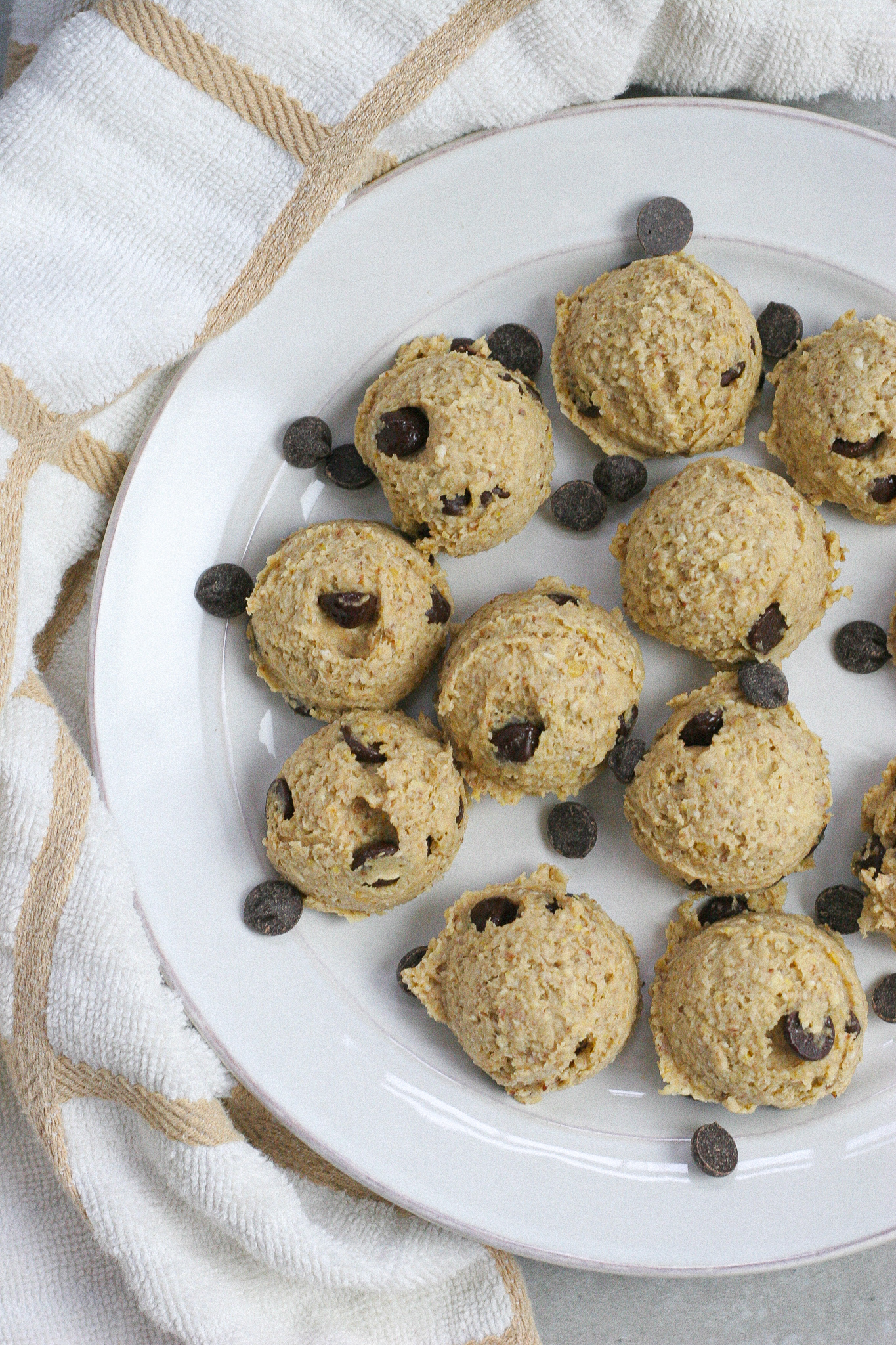
PCOS-Friendly Cookie Dough Bites

I don’t know about you guys, but the idea of being able to eat anything that tastes EXACTLY like raw cookie dough, sounds amazing to me! Especially if I can eat and not feel worried about the effects it may have on my PCOS. 

I have been craving raw cookie dough like crazy lately but I’m fully aware that eating raw cookie dough has some potentially negative side effects. For one, eating raw eggs can give you salmonella…no thank you. Next, standard cookie dough, especially store bought is generally high in refined grains and sugars…another no thank you. So I decided to put my cooking skills (baking skills?) to the test. 

Because I didn’t have oat flour on hand, I blended my gluten-free old-fashioned oats into a flour using my blender (or food processor). I had to pulse a couple extra tablespoons to get my dough consistency to where I wanted it so feel free to do the same with yours! I think the only thing I will change when I make this again is using mini chocolate chips instead of standard size chocolate chips so I can cover more surface area with chocolate (more bang for your bite!). I used Enjoy Life chocolate chips because they are dairy free and still taste delicious!

So what makes these delicious little bites PCOS-friendly?

  • Great source of complex carbohydrates (think slower rise and fall in blood sugar for better blood sugar management)
  • Gluten and dairy-free, vegan
  • Low in refined sugars (only 3 tbsp of maple syrup for the whole recipe!)
  • Good source of plant-based protein, healthy fats, fiber and B vitamins

Ok I know, I know! You’re starting to salivate so let’s jump to the recipe! Hope you guys enjoy! 🙂

PCOS-Friendly Cookie Dough Bites

Course Dessert, Snack
Keyword cookie dough, healthy dessert, PCOS friendly
Servings 18 bites
Author Elizabeth Bissell

Ingredients

  • 1 cup gluten free oat flour I used old fashioned oats and pulsed into a flour using a blender. I used an additional 2 tbsp oat flour.
  • 1 can chickpeas, drained and rinsed
  • 2 tbsp ground flaxseed
  • 2 tbsp coconut oil, melted
  • 1 tsp vanilla extract
  • 3 tbsp pure maple syrup
  • ½ cup dairy-free chocolate chips I used the brand Enjoy Life. Mini chocolate chips would also work great here.
  • pinch Himalayan pink sea salt

Instructions

  1. Place the oat flour in a medium size mixing bowl. If you need to pulse oats into an oat flour, do this using a food processor or blender and grind into a powder.

  2. Next, blend the chickpeas into a paste by adding 4-5 tbsp of water as you blend in a food processor. Once smooth, add to the oat flour.

  3. Add in the coconut oil, salt, vanilla extract, flaxseed, and maple syrup. Stir to combine.

  4. Fold in the chocolate chips. Using a small stainless steel ice cream scoop, form into individual balls. Store in the refrigerator. These can also be frozen for later use.

Posted on Leave a comment

Top 3 Tips for Transforming a PCOS Diet to a Healthy PCOS Lifestyle

When I first realized that my PCOS was the culprit of my irregular and potentially anovulatory menstrual cycles, I fell into the trap that all of us often do. I was so desperate to get my fertility journey back on track that I was willing to try anything. If you’re a fellow cyster who has struggled with sporadic cycles due to PCOS this may sound all too familiar. I wanted to know what diet, supplement, herb, and food that would help cure all.

After a few weeks with this mindset of “hey, let’s try everything”, I felt worse! Overwhelmed, frustrated, and honestly, just sitting around wondering. Wondering if all the supplements, diet changes, and ALL the things I was doing was actually working. I realized I had approached this with my emotions manning the ship. I must admit it is hard not to when something as personal and vulnerable as infertility is on the table. But I took a step back and took a bigger look. I realized I needed to approach this with my dietitian hat on. 

I remembered that it’s small, sustainable changes that make the BIGGEST difference long term. I remembered that approaching PCOS with a diet mindset set me up for a black and white thought process, which meant little wiggle room for real life situations. Real life situations like having to avoid the delicious, gluten-containing Christmas cookies that my mom only makes once a year that I have loved for years or not allowing myself one piece of Halloween candy because it contains dairy and gluten. This type of PCOS “diet” mindset was a lose-lose situation. It set me up to feel shame and guilt no matter what choice I made…shameful if I broke my “diet” and ate the food and guilt if I passed on a food that I absolutely LOVE!

Adjusting my PCOS diet to a healthy PCOS lifestyle was the best decision I could of made. It allowed me to enjoy life, promote healthy hormones, feel GREAT, and feel like I was making the right choices for my fertility AND PCOS.

Now, I’m going to sit here and lie and say this was easy. It took time. Shit, I’m STILL making tweaks and likely will be for some time. It took small changes to make BIG change long-term. It took me listening to my body and reflecting on how I was feeling throughout each small change to best understand what was right for MY body and MY lifestyle. I used evidence-based research combined with realistic behavior change and my personal experience to develop the framework in my 1:1 coaching program.

In my opinion, this is why it’s SO useful to work with PCOS and fertility-focused dietitian. As I said before, it’s so easy to fall into the trap of just going from diet to diet or supplement to supplement trying to aimlessly “fix” your PCOS and fertility issues. But the truth is, 98% of diets ultimately fail. And supplements are expensive, am I right?! Here is a little visual I used on my Instagram the other day and I think this really represents the trap we often fall into. 

How we approach diet questions for pcos and fertility

This is EXACTLY why dietitian’s occupations exist. We help clear up that grey area of “it depends” and apply evidence-based information based on your specific needs. This allows you to be most successful long-term. I’ve said this before and I’ll say it again. PCOS is a marathon, not a sprint. It cannot be “cured” by one specific diet or supplement or food, we can only work to alleviate the symptoms and side effects to get your body working the best we can. Now let’s chat about my top 3 tips for transitioning to a PCOS lifestyle!

Top 3 Tips for Transitioning to a Healthy PCOS Lifestyle

I firmly believe that adjusting from a diet to lifestyle mindset for PCOS will be the best decision you’ll make in 2020 by far! The tips above are only few of many tips I use in my 1:1 coaching program to help optimize women’s fertility through better management of their PCOS. If you’re ready to adjust your diet to a healthy PCOS lifestyle then my 1:1 coaching program could be right for you!

Tags
3rd trimester added sugar alcohol antioxidant anxiety appetizer apple apples April arugula avocado bars basil Beach Beetroot powder beginner's guide berry crumble Bites blogging blueberries boating Bonfire breakfast brussel sprouts burgers Butternut Squash Cancer canned goods carrot cashew milk Cauliflower Charcoal charring chestnut chocolate chocolate protein bar cholesterol Cocktails coconut curry coconut oil Colorless Foods comfort foods common mistakes condiment COVID-19 cranberry Cruciferous crumble cucumber cucumber avocado gazpacho curry CVD CVD risk Czech dairy free dates dessert dessert bars dessert hummus detox diet Dietitian diet mistakes dill dill pickles dinner Dips Dumplings egg muffins eggs emergency foods Energy energy balls Energy bites entree Facts fall farmers market fats February fertility fiber flavor flaxseed Florida Food food groups Foodie food tour Forest freezer friendly fridge staples frittata Fruits garden gardening gazpacho get outside Gift Guide Gluten free goal setting go further with food Grand Rapids granola grapefruit green tea green thumb guide Health Health claims Healthy healthy dessert healthy dinner healthy eating healthy fats healthy lifestyle healthy snack Healthy Snacks Heart Health Heart Healthy herbs hibiscus infused holiday Holidays Homecooking homemade homemade cashew milk hormonal balance hormone health hormones horseradish Houston how to how to guide hurricane harvey ice cream infertility jam kale Ketogenic Ketogenic diet Key West kitchen hacks kombucha lavender lifestyle local low salt low sugar March massaging Matcha meal prep meatless meatless meals mediterranean mediterranean diet menstrual cycle menstrual regularity Michigan mindful mindfulness mindset national nutrition month News nice cream nice cream bars nnm Not-so cheesy dip Nutrition nutrition health Nutrition Labels Oatmeal oils Omega 3 Oncology one sheet dish onion Outside Party PCOS pcos-friendly pcos fertility PCOS friendly peach pear period pesto pickled radishes Pickles Pickling plant-based plum bbq plum bbq sauce plums polycystic ovarian syndrome popsicle pork tenderloin post-vacation potatoes power salad Pregnancy Preserving probiotics produce Pumpkin Pumpkin Hummus Pumpkin Mousse Pumpkin Pancakes pumpkin seed Pumpkin soup Pure Michigan questions for a farmer quinoa quinoa cranberry apple arugula salad radishes raspberry lemonade smoothie RD Day Recap recipe red currants red pepper rootz nutrition salad Salt-free sauce seed cycling sesame seed shakshuka side dish side dishes Simple Swaps smart goals smoothie smoothies snack Snacks soup soy spice Spirulina spring staples Stay healthy stir fry stress stress reduction sugar summer summer salad sunflower seed Super Bowl Superbowl Sunday survival sweet potato thai burger thai cuisine time-saving tofu tomato toolkit top 10 tour travel Trends turmeric tzatziki sauce vacation variety vegan vegetable enchilada Vegetables vegetarian Vitamin D warm weather wedding wedding season weeknight weeknight dish West Michigan winter salad WZZM WZZM 13 yogurt sauce
Posted on Leave a comment

Seed Cycling for Hormonal Balance

Seed cycling has been a hot topic of conversation lately! Cysters trying to conceive or just trying to regulate their cycles have been eager to know what it’s all about. So I decided to take a deep dive and explain what seed cycling is and what the scientific evidence is saying about its proposed benefits.

This holistic tool has been used by women to balance hormones and promote healthy menstrual cycles. Seed cycling is a process of rotating the consumption of certain seeds in your diet to promote a healthy production of the hormones, estrogen and progesterone. The seeds used include flax seeds, pumpkin seeds, sesame seeds, and sunflower seeds. Flax seeds and pumpkin seeds are used during the 1st phase of the menstrual cycle to regulate estrogen production. Sesame seeds and sunflower seeds are used during the 2nd phase of the menstrual cycle to stimulate healthy production of the hormone, progesterone.

How do these hormones regulate my cycle?

  • Estrogen: this hormone rises right before ovulation during the follicular phase of the menstrual cycle. This hormone is produced by follicles and is responsible for ovulation.
  • Progesterone: this hormone is released from the corpus luteum during ovulation and rises after ovulation during the luteal phase of the menstrual cycle. It stimulates thickening of the uterine lining to prepare for pregnancy.

What are the phases of a menstrual cycle?

  • Follicular phase: this starts with the 1st day of your period to when you ovulate. Generally, this is day 1 through day 14. However, everyone ovulates differently so this range may vary.
  • Luteal phase: this phase starts after you ovulate and ends the day before your next period starts. This generally lasts anywhere from 10-16 days and tends to be more consistent than the follicular phase.

What seeds and why are used?

  • Pumpkin seeds: good source of zinc, magnesium, iron, protein, and antioxidants. The magnesium content promote better blood sugar control, which can be helpful in maintaining healthy hormonal balance. Zinc promotes production of progesterone in preparation for the luteal phase of the menstrual cycle as well as support healthy testosterone levels before ovulation.
  • Flax seeds: great source of antioxidants, fiber, and healthy fats. Contains alpha-linoleic acid, lignans, and protein. These lignans, or phytoestrogens can be beneficial in estrogen production and estrogen metabolism. Ground flaxseed consumption has also helped with elongating luteal phases during the menstrual cycle.
  • Sesame seeds: Good source of healthy fats, plant protein, vitamin E, magnesium, and lignans. Help reduce inflammation in the body and promote proper cholesterol metabolism, therefore greatly benefiting heart health as well.
  • Sunflower seeds: Rich in vitamin E, selenium, healthy fats, plant protein, and iron. Aids in reducing inflammation in the body, better blood sugar control, and healthy cholesterol metabolism. Sunflower seeds can also help with estrogen detoxification, as well as reducing PMS-related symptoms.

How to seed cycle:

  • During the follicular phases of your menstrual cycle, consume 1 Tbsp each of:
    • Pumpkin seeds
    • Flax seeds
  • During the luteal phase of your menstrual cycle, consume 1 Tbsp each of:
    • Sunflower seeds
    • Sesame seeds

How to prepare and store the seeds?

You can blend a week’s worth of seeds ahead of time and store in an air-tight container in the refrigerator or in the freezer. You don’t want to ground the seeds together too far in advance to ensure the seeds don’t oxidize and go rancid.

Ways to consume the seeds?

I love adding the seeds to smoothies, yogurt, avocado toast, homemade seed bars, oatmeal, chia pudding, or sprinkling on cereal. It is recommended to consume these seeds consistently for at least 3 cycles to see potential benefits.

What does the science say?

If you go to PubMed and search for the benefits of seed cycling, you’re likely to come to a dead end quite quickly. There is minimal research supporting the use of seed cycling for hormonal balance. However, there is evidence supporting the health benefits of individual nutrients that many of these seeds contain, such as zinc, magnesium, selenium, vitamin E, omega 3-fatty acids, and lignans, as indicated in the description of the seeds above. Proposed benefits of seed cycling include:

  • Menstrual cycle regularity
  • Healthy production of estrogen and progesterone
  • Proper metabolism and detox of estrogen and progesterone
  • Healthy ovulation

Here’s the thing. For some women, it has worked wonders. Others haven’t seen any effect. My take? If you’re a woman, especially a woman with PCOS trying to somewhat regulate your cycles and are looking for holistic measures to do so, then there is no harm in trying this. Also just because the research doesn’t exist doesn’t mean it won’t benefit your health to include these seeds into your daily diet. All of these seeds have nutritional benefits to consuming them.

Will seed cycling help with my PCOS and fertility?

While we have discussed many of the individual health benefits of the seeds used in seed cycling above, the research regarding seed cycling for PCOS and fertility is minimal. Anecdotally, some women swear by it regulating their menstrual cycle and some research has demonstrated less anovulatory cycles with the use of these healthy fats on a daily basis. So looking at it plainly, a regular cycle with healthy ovulation equates to better fertility. If you happen to fall into this group of ladies who have seen a benefit to seed cycling then yes, do you girl! Many women also find that they just feel better overall even if they don’t see changes in their cycle. Do keep in mind that seed cycling is not the end answer to your infertility issues. It should be used in combination with quality sleep, regular physical activity, self-care practices, and a overall healthy diet rich in healthy fats, fruits and vegetables, whole grains and adequate protein.

What’s the bottom line?

Whether you decide to follow the guidelines of consuming 1 tbsp each of pumpkin, flaxseed, sesame, and sunflower seeds during the designated time frame outlined by seed cycling or just choose to incorporate any of these healthy fats on a daily basis throughout your menstrual cycle, both ways are A-OK!

Some women may find it easy and enjoyable to follow the guidelines outlined by the seed cycling schedule, while others may get exhausted with the preparation or just find it too difficult. If you find yourself in the latter group, then the bottom line is to find a way to include 1-2 tablespoons of ANY of these healthy seeds daily regardless of the timing!

Posted on Leave a comment

8 Facts about Alcohol and Fertility

Reducing alcohol intake for potential mama’s and dad’s can be tricky. I don’t know about you but I find that most social events I go to involve some form of alcoholic beverage, which can make it very difficult to avoid alcohol or avoid attention for NOT drinking. Because there in lies the next question, “OMG you’re not drinking, are you pregnant?” This specific question is especially uncomfortable when you are trying to conceive but have not yet had success.

I’m going to be perfectly honest, I enjoy drinking alcohol! Wine, tequila, white claws, and high noon exactly in that order…not on the same night of course 😉 I have no shame! I am human just like the rest of us. Therefore, reducing alcohol intake for me is a purposeful action and takes some work. This may not be the case for everyone, but for me, it is. For this reason, it can be a huge challenge to be socially happy while trying to reduce your alcohol intake to promote optimal fertility, which led me to ask myself, does reducing or avoiding alcohol entirely really help with fertility? I decided to dive into the evidence and see what the science says.

Woman-drinking.png

Here are the 8 facts about alcohol, fertility, and managing PCOS.

  1. Alcohol intake can affect your quality of sleep, which can ultimately alter your cortisol and melatonin levels making your PCOS worse.
  2. Studies related to alcohol intake and fertility are limited and not always reliable due to the unethical issues with testing this and the retrospective nature of many studies.
  3. Moderate intake of alcohol has not shown negative impacts on semen quality and in some cases, moderate alcohol consumption has shown positive health effects due to the antioxidant content found in red wine. However, excess alcohol intake (>14 servings) has been correlated with decreased fertility.
  4. Excess alcohol intake can increase inflammation in the body. This inflammation can cause worsening gut health and central obesity.
  5. Alcohol intake causes a burden on the liver. If the liver is sluggish due to frequently detoxing alcohol intake, it may not be as efficient at clearing estrogen levels, causing hormonal imbalance.
  6. Many alcoholic beverages are high in sugar due to the simple syrups, sodas, and juices used for mixing. Excess sugar intake can lead to worsening abdominal obesity, which can further deteriorate your insulin resistance. Women with PCOS are also more likely to develop non-alcoholic fatty liver disease even without alcohol intake! Drinking alcohol on top of this disease can further worsen your liver function.
  7. Because of the high sugar nature of some mixed drinks, your blood sugar will spike quickly and drop rapidly. This can lead to increased hunger and binge-eating late at night or in the morning.
  8. Limiting or keeping your alcohol intake within the recommended levels is safe. For women, this includes 1 alcoholic beverage daily and for men, 2 drinks or less.

Lime cocktail

What to do with this information?

  • If you like to drink alcohol, drink in moderation! And that includes your partner 😉 If you’re not a drinker, don’t start drinking now.
  • Plan to have your drinks with a meal to avoid low drops in blood sugar.
  • Include high fiber foods in your diet regularly to keep your estrogen levels at normal levels.
  • Avoid cocktails with high amounts of added sugar from juice, soda, or syrups. Utilize diet sodas or flavored water to mix with your alcohol instead.
  • Keep a water bottle or glass of water near you while you drink. This is a good reminder to keep yourself hydrated while you drink.
  • Enjoy a mocktail! A little bit of fresh lime juice with your favorite zero-calorie flavored water and a few sprigs of fresh mint…yes please! Just as refreshing as a regular cocktail.
  • Similar to caffeine, start cutting back on your alcohol intake slowly. Rome wasn’t built in a day! This will improve efficacy for longer term behavior change as well. If you normally drink 2 drinks at night, try to set a time limit on when you can allow yourself a drink or have your favorite zero-calorie flavored water on hand to substitute that other drink.
  • Don’t use alcohol as a social crutch. You are more than capable of having a good time with or without the use of alcohol. Don’t depend on alcohol to make you more social or outgoing. Be yourself!

-EAB

Posted on 1 Comment

Dairy-free, Gluten-free Chocolate Pumpkin Dessert Bars

OCTOBER! How the hell are ya?! I’ve missed you so! By this point, my husband is already wondering when I’m going to stop cooking with so much pumpkin. But after he tastes whatever I’m making, he quiets down and remembers how delicious pumpkin really is. I have no idea why I don’t cook with it more throughout the year, but I guess that’s what makes it so damn special.

Y’all know my kitchen is a no-baking zone when it comes to desserts so this is another easy frozen dessert that can be made pretty quickly with some no-fuss ingredients. Much of what I used I already had in my pantry or fridge. These little babies will satisfy your sweet tooth while offering a powerful nutrition punch.

IMG_7923-2

These bars are very PCOS-friendly! Here are some reasons why:

  • Low in added sugar: no huge spikes in blood sugar and better insulin sensitivity
  • High in dietary fiber and healthy fats: aids in satiety and weight management and reducing cravings and estrogen dominance
  • Loaded with antioxidants and important vitamins/minerals from the pumpkin and cocoa powder
    • Vitamin C: aids in improving progesterone levels (for women with low progesterone) in the luteal phase to improve chances of pregnancy
    • Vitamin A: supports the immune system to help fight inflammation
    • Flavanoids: reduces inflammation in the body to improve egg quality
    • Magnesium: relieves PMS symptoms, improves mood and insulin resistance
  • Good source of tryptophan: may aid in improved sleep quality

A common misunderstanding with PCOS is that we have to completely eliminate desserts or sweets because of the sugar or refined carbohydrate intake, but remember the key is enjoying desserts that are lower in added sugar AND offer nutritional benefit. As you can see, this sweet treat offers so many nutritional benefits! Not to mention, it’s so yummy! I hope you guys enjoy!

IMG_7920-2

Dairy-free, Gluten-free Chocolate Pumpkin Dessert Bars

Course Dessert
Keyword chocolate, healthy dessert, PCOS, PCOS friendly, pumpkin
Author Liz Bissell

Ingredients

Base

  • 1 cup walnuts
  • 5 dates, sliced
  • 2 tbsp cocoa powder

Filling

  • cup raw cashews, soaked overnight or for at least 2-4 hours
  • ½ can coconut milk
  • ¾ can coconut cream
  • 2 tbsp cocoa powder
  • 1 tbsp pumpkin pie spice
  • ¾ can 100% pumpkin puree
  • 3 tbsp maple syrup
  • 1-2 pinches coarse sea salt

Topping

  • Handful of dark chocolate chips, chopped

Instructions

  1. For the base, pulse the walnuts in a food processor until finely chopped.

  2. Add the cocoa powder and pulse until evenly combined. Next, add in the dates and pulse until dates are completely blended.

  3. Using a 9 by 9 freezer-friendly dish, spread the date mixture along the bottom of the pan and press firmly down covering the entire bottom of the pan. Freeze for at least 15 minutes.

  4. While the base is freezing, add the cashews, coconut milk, coconut cream, maple syrup, pumpkin puree, cocoa powder, pumpkin pie spice, and sea salt to a food processor or blender. Blend until smooth. Add additional salt as needed.

  5. Pour the filling over the frozen crust and sprinkle the chopped chocolate chips on top. Freeze for 2-3 hours.

  6. Remove from the freezer about 30 minutes prior to eating. Cut into squares and enjoy!

Posted on 2 Comments

Top 10 PCOS-friendly snacks

Hey cysters! This past weekend, my husband went on a wonderful long weekend getaway to northern Michigan for our 1-year wedding anniversary. Travel can sometimes stress me out with all the planning, packing, and prepping, but one of the many things I’ve learned from my lovely husbands’ type A personality is that planning ahead does pay off.

Having certain things, such as healthy snacks and my supplements from home keep me on track and honestly allow me to have a better time on vacation. When I plan to have my favorite healthy snacks available to me, I don’t stress about when and where I’m going to find healthy snacks if I get hungry between meals or if we have to hit the road around mealtimes.

Although my cravings and insulin resistance have improved, I still am a cyster who generally needs a snack or mini-meal every 2-3 hours. For me, I’ve found that if the right snacks are in my purview, I tend to do a better job with making sure my snacks are PCOS-friendly and overall healthy. Noshindietitian-20

Now what does it mean when I say “PCOS-friendly” snacks? This means I try to keep the snacks high in protein or as a kick-ass combo of nutrients. The best option is to pair complex carbohydrates with protein or fat. This combo allows for a slower rise in blood sugar and ultimately better insulin control. Not to mention, these snack combinations generally keep you full for longer and helps avoid overeating or binge-eating at your next meal. Trail mix

Here are some of my favorite PCOS-friendly snacks!

  1. Fresh fruit (apples or bananas) with individual nut butter packets. If you’re traveling by car, you can also pack your own nut butter of choice in a small tupperware if you don’t have the individual packets.
  2. Trail mix with dark chocolate (I like mixing dark chocolate with cashews and pumpkin seeds)
  3. Biena dry roasted chickpeas
  4. Chomps or other grass-fed beef jerky
  5. Hummus with veggies (broccoli, carrots, cucumbers) or whole grain crackers
  6. Half PB sandwich with sliced bananas on whole grain bread
  7. Seapoint Farms dry roasted edamame
  8. Individual (low-added sugar) yogurt topped with pumpkin seeds and cocoa nibs
  9. Hard-boiled egg with handful of pistachios
  10. Protein bars, such as Kind bars or RX bars, or homemade energy bites (check out my Matcha energy bites or pumpkin carrot energy bites!)

Be sure to comment below with some of your favorites!

-EAB

Posted on 2 Comments

Pumpkin Carrot Energy Bites

Tis’ the season for pumpkin spice errythang! And I must admit, I’m totally here for it. I am an avid fall lover. Although I will miss summer dearly, my heart belongs to those crisp autumn days sipping a hot cider snuggling by a crackling fire while watching Michigan State football. When I lived in Houston, Texas for a while, I could not handle the lack of season change (or mild season change I should say). I full on boycotted it by wearing hoodies and fall attire despite the 90+ degree days. This eventually stopped because for starters, I was sweating my ass off and also the leaves on the trees weren’t changing so it all just felt off.

Needless to say, I didn’t last long in Texas. As much as I want to fight it, I’m a northern girl through and through. My biological clock just seems to need the season changes. Now that I’m back in Michigan, I take FULL advantage of fall and everything that comes with it. Y’all know what this means…PUMPKIN. Noshindietitian-21

Pumpkin is just a kick-ass vegetable. Well really it’s a fruit, but acts more like a vegetable. Not only does it make all your fall recipes taste wonderful, but it also has some serious health benefits. It’s a beta-carotene rock star, which equates to high vitamin A in the body. It also provides a couple really great antioxidants, lutein and zeaxanthin. These special characteristics in addition to its vitamin C, fiber, potassium, and vitamin E content, help boost your immune system (which we could all use with flu season ahead), improve your eyesight, and help prevent risk of developing chronic diseases.

These pumpkin carrot balls are no exception. They are actually a vitamin A double whammy with the addition of the carrots. They are also vegan, dairy, and gluten-free. The ground flaxseed is the nutritional cherry on top by contributing healthy omega-3 fatty acids, protein, and fiber. Carrot balls.jpg

I personally love any type of energy bite (or ball). They are a great mid-afternoon pick-me-up, after dinner sweet treat, grab and go healthy snack, or just an anytime bite of deliciousness. These can also be frozen for later use. If you’re looking to boost the protein content, feel free to add your favorite protein powder, chia seeds, or more ground flaxseed. A vanilla protein powder would pair perfectly! I opted out this time around because my protein powder was vanilla coconut flavor and I wasn’t really feeling the coconut for this recipe. By all means, get creative and tailor to your flavor preferences! Enjoy! Carrot balls 2

Pumpkin Carrot Energy Bites

Course Snack
Author Liz Bissell

Ingredients

  • 3 large carrots, chopped
  • 3 dates, pitted and roughly chopped
  • ½ cup 100% pumpkin puree
  • 1 tbsp pure maple syrup
  • 3 tbsp ground flaxseed
  • ½ tsp vanilla extract
  • ¼ cup Gluten-free old-fashioned oats (can also use ¼ cup flour of choice and regular old-fashioned oats if you prefer)
  • ¼ tsp cinnamon
  • ¼ tsp cloves
  • 1 cup pecans, finely chopped

Instructions

  1. Pour oats into a food processor or blender and pulse until a fine powder. Pour into a small bowl and set aside.

  2. Add the carrots into the food processor and pulse until the carrots are finely minced. Add in the dates and half of the pumpkin puree. Blend into a paste.

  3. Add in the rest of the pumpkin puree, oat flour, maple syrup, flaxseed, vanilla extract, cinnamon, and cloves. Pulse until evenly combined.

  4. Place the chopped pecans into a medium bowl. Using a cookie scoop, form the dough into 1-2 inch balls and roll in the pecans to coat.

  5. Store in the refrigerator. Enjoy as a snack or mini dessert!